

Combine Harvester Brands: 9 Manufacturers to Know in the UK & Ireland
CLAAS, New Holland, John Deere and Case IH are among the best-known combine harvester brands in the UK and Ireland, alongside Fendt, Massey Ferguson, DEUTZ-FAHR, Sampo-Rosenlew and Laverda.
But there is no single "best" combine harvester brand for every farm. The right machine depends on acreage, crop mix, straw requirements, harvesting capacity, local dealer support and – particularly in the UK and Ireland – how well the combine can make use of a short and sometimes unpredictable harvest window.
From conventional straw-walker combines to high-capacity rotary and hybrid machines, today's manufacturers offer very different approaches to threshing, separation and automation.
Here are nine combine harvester manufacturers worth knowing if you are buying new or looking for a used combine harvester from the European market.

Combine harvester brands at a glance
| Brand | Models/ranges to know | Type | Flagship or notable model |
|---|---|---|---|
| CLAAS | LEXION, TRION, EVION | Hybrid and straw walker | LEXION 8900 TERRA TRAC |
| New Holland | CR, CX | Twin rotor and conventional | CR11 |
| John Deere | X9, S7, T5, T6 | Dual rotor, single rotor and walker | X9 1100 |
| Case IH | AF, Axial-Flow | Single rotor | AF10 |
| Fendt | IDEAL | Single and dual rotor | IDEAL 10T |
| Massey Ferguson | IDEAL, Beta, Activa S, Activa | Rotor and walker | MF IDEAL 9 |
| DEUTZ-FAHR | C9300 | Straw walker | C9306 |
| Sampo-Rosenlew | Comia | Walker and hybrid | Comia C24 2Roto |
| Laverda | M Series and earlier ranges | Primarily conventional | Popular mainly on the used market |
The figures and ranges below refer to manufacturer information available in 2026. Specifications can vary by model year, market and configuration.
1. CLAAS combine harvesters
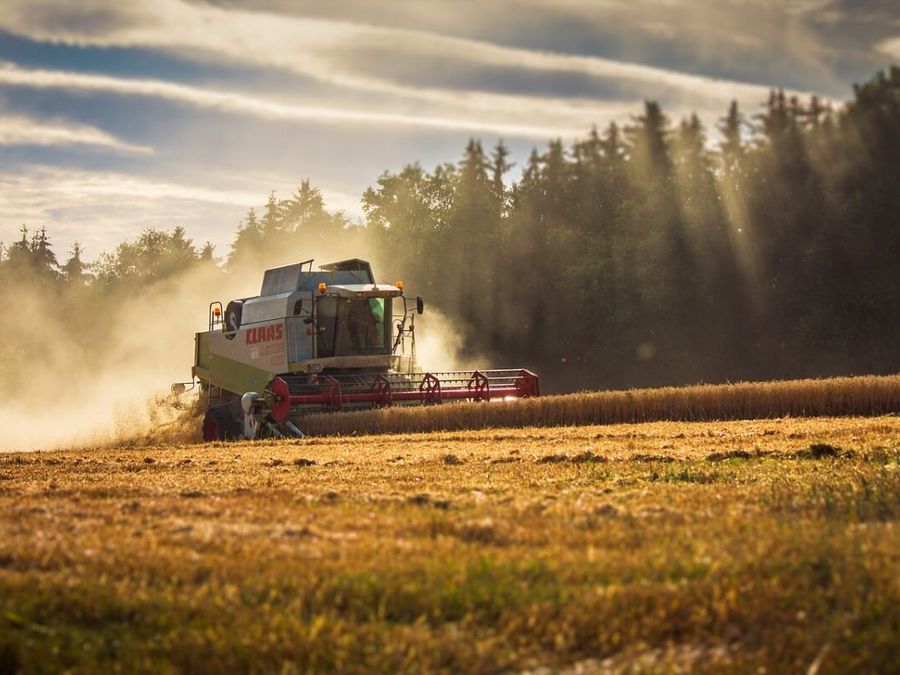
CLAAS is one of the names most closely associated with combine harvesting in Europe and has a particularly strong presence in the UK agricultural machinery market.
Its combine range covers very different farm sizes. EVION models sit at the more compact end of the range, TRION covers a broad middle ground, while LEXION is aimed at farms and contractors requiring substantially higher harvesting capacity.
Which CLAAS combine should you know?
The CLAAS LEXION is the manufacturer's best-known high-capacity combine range. Unlike a conventional straw-walker combine, the larger LEXION machines use CLAAS' APS SYNFLOW HYBRID threshing and separation system.
For the 2026 model year, the flagship LEXION 8900 TERRA TRAC is rated at 790 hp and carries an 18,000-litre grain tank.
Other CLAAS ranges are equally relevant on the used market. TRION machines offer a wide choice of threshing concepts and specifications, while older LEXION and TUCANO combines remain widely available across Europe.
Why consider CLAAS in the UK or Ireland?
CLAAS offers machines ranging from relatively compact combines to high-output tracked models. That breadth is valuable where requirements differ significantly between owner-operated farms, mixed farms and large contractors.
The TERRA TRAC option on larger machines is also particularly relevant where reducing ground pressure and maintaining traction during difficult harvest conditions are priorities.
Popular CLAAS combine ranges: LEXION, TRION, EVION, TUCANO and older DOMINATOR models.
2. New Holland combine harvesters
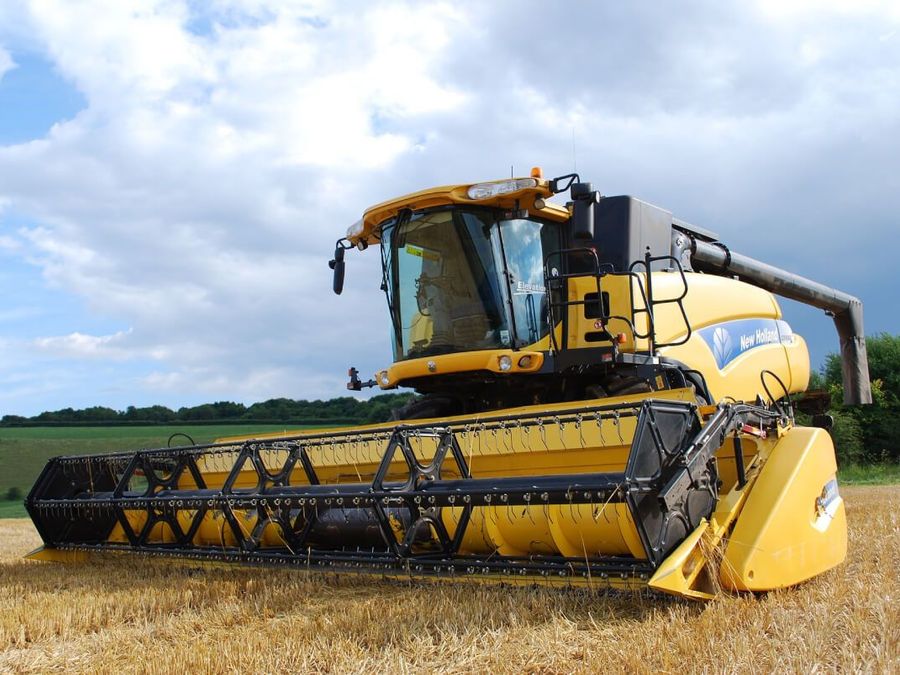
New Holland's yellow combines have a long-established presence in British and Irish farming. The manufacturer offers both conventional threshing systems and its high-capacity Twin Rotor concept.
The CR range is particularly important because New Holland has continued to develop the twin-rotor layout originally introduced decades ago.
Which New Holland combine should you know?
The most important current model is the New Holland CR11.
Launched alongside the CR10, the CR11 represents a significant step beyond the previous CR10.90 flagship. It uses two 24-inch rotors and the Twin-Clean cleaning system, with maximum engine power of 775 hp and a 20,000-litre grain tank.
The CR10 sits below it with 635 hp and a 16,000-litre tank. New Holland manufactures both machines at its combine plant in Zedelgem, Belgium.
The CR11 has now replaced the CR10.90 at the top of New Holland's combine range.
Why consider New Holland in the UK or Ireland?
New Holland is particularly interesting for businesses prioritising throughput, while the availability of different combine architectures means buyers are not limited to one threshing concept.
Its extensive population of older CX, TX and CR machines also makes the brand highly relevant when looking at second-hand combines.
Popular New Holland combine ranges: CR, CX and older TX models.
3. John Deere combine harvesters
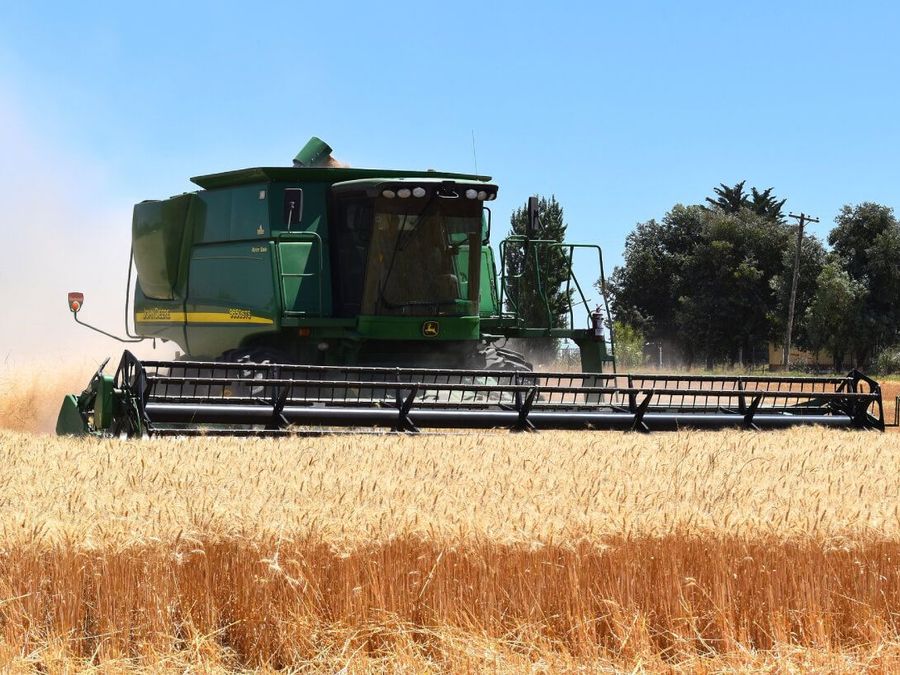
John Deere may be best known for tractors, but its combine range is equally substantial. For UK buyers, the current line-up spans conventional multi-drum walker machines through to large single- and dual-rotor combines.
The present range includes the T5 and T6, S7 and flagship X9 series.
That variety matters because choosing between a walker and a rotary combine is often more important than simply comparing horsepower.
Which John Deere combine should you know?
At the top of the range is the John Deere X9 1100.
The X9 uses a wide-body dual-rotor design and is rated at up to 700 hp. Current UK specifications list a 16,200-litre grain tank and a peak unloading rate of 186 litres per second. John Deere states that the machine is capable of harvesting at more than 100 tonnes per hour under suitable conditions.
There is also an important update for buyers comparing the latest machines: John Deere has announced a 19,400-litre grain tank option for model year 2027 X9 combines, together with a new 15.2 m HDX 50 header.
Why consider John Deere in the UK or Ireland?
The main advantage of the range is choice. Buyers wanting to preserve good-quality straw can look towards the T-series walker machines, while larger arable businesses can move towards the S7 or X9.
Automation has also become increasingly important. Current S7 and X9 machines can use systems such as Predictive Ground Speed Automation and Harvest Settings Automation to adjust the combine as crop conditions change.
Popular John Deere combine ranges: X9, S7, T5, T6 and older T- and S-series machines.
4. Case IH combine harvesters
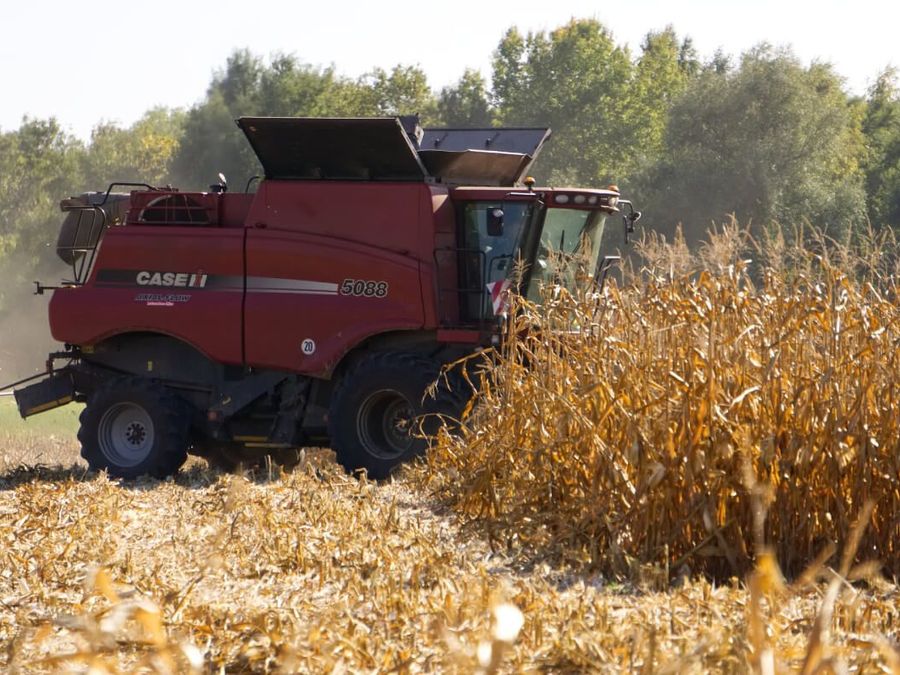
Case IH is closely associated with rotary harvesting technology. The company introduced its first commercial Axial-Flow combine in 1977, and the single-rotor concept has remained central to the brand ever since.
The principle is relatively straightforward: threshing and separation take place around a longitudinal rotor instead of relying on the conventional drum-and-straw-walker arrangement.
Which Case IH combine should you know?
The current flagship is the Case IH AF10, which sits above the established Axial-Flow range.
It uses the manufacturer's latest single-rotor design, with maximum power of 775 hp, a 20,000-litre grain tank and an unloading rate of up to 210 litres per second.
Below it, the AF9 offers up to 635 hp and a 16,000-litre grain tank.
The more established Axial-Flow ranges remain important on the second-hand market.
Why consider Case IH in the UK or Ireland?
Case IH is particularly relevant to buyers who favour the simplicity and crop-flow characteristics of a single-rotor machine.
Modern models combine that architecture with automatic combine adjustment. Harvest Command, for example, can alter machine settings according to the operator's targets for losses, throughput and grain quality.
Popular Case IH combine ranges: AF Series, Axial-Flow 250/260 Series and earlier 140, 150, 240 and 250-series machines.
5. DEUTZ-FAHR combine harvesters
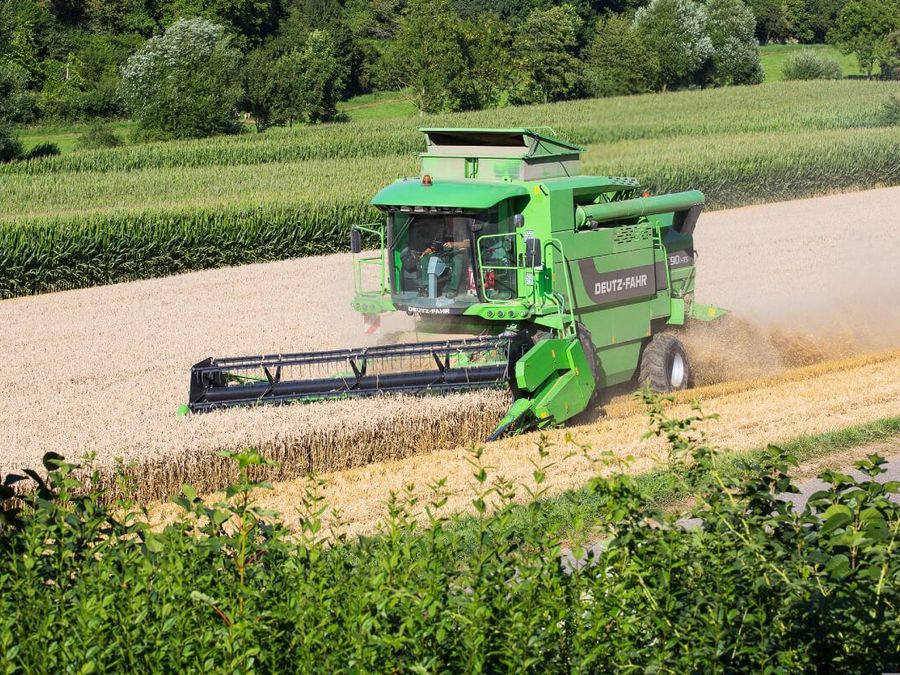
DEUTZ-FAHR takes a somewhat different position from the manufacturers competing to build ever larger Class 10 machines.
Its current C9300 range retains a conventional threshing system with straw walkers, concentrating on straightforward crop handling and straw quality rather than chasing the highest possible horsepower figure.
Which DEUTZ-FAHR combine should you know?
The current C9300 Series includes the C9306 TS and C9306 TSB.
The manufacturer's current UK product information lists 353 hp, while the grain tank holds 10,500 litres. Cutterbars are available in widths of up to 9 metres.
The threshing system is designed to remove a large proportion of the grain before the crop reaches the straw walkers, while still treating the straw relatively gently.
Why consider DEUTZ-FAHR in the UK or Ireland?
Not every farm needs a 700-800 hp rotary combine.
For businesses where manageable running costs, conventional threshing and usable straw are more important than headline capacity, machines such as the C9300 can represent a very different proposition from the flagship combines elsewhere in this guide.
Older DEUTZ-FAHR combines also appear regularly on the European used machinery market.
Popular DEUTZ-FAHR combine ranges: C9300 and earlier C9000, C7000 and 60-series machines.
6. Fendt combine harvesters
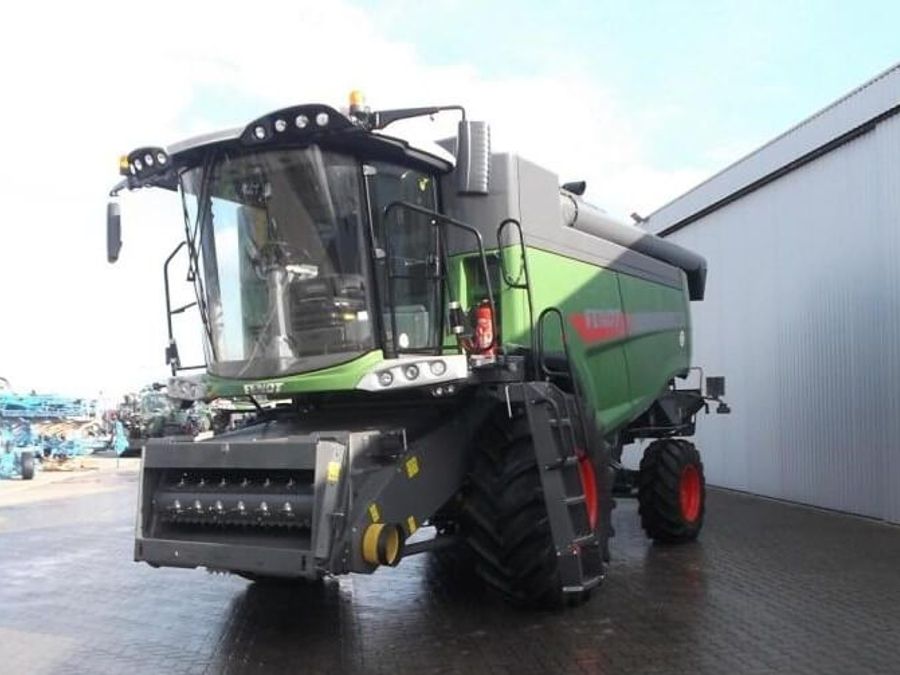
Fendt is best known by many farmers for its tractors, but the AGCO-owned manufacturer also competes at the high-capacity end of the combine market.
The most distinctive current range is Fendt IDEAL.
Unlike some manufacturers with several completely different combine families, IDEAL concentrates heavily on rotary harvesting. Depending on the model, the combine uses either a single or twin Helix rotor system.
Which Fendt combine should you know?
The flagship is the Fendt IDEAL 10T.
Current UK specifications list maximum power of 790 hp and a 17,100-litre grain tank. The IDEAL 10T uses two rotors and is available on tracks.
One of the range's most unusual options is IDEALdrive, which replaces the conventional steering wheel with joystick steering and gives the operator an unobstructed view towards the header.
Why consider Fendt in the UK or Ireland?
The IDEAL is aimed primarily at businesses requiring substantial harvesting output and high levels of automation.
Tracked versions can also be attractive where soil protection and traction matter during a difficult harvest, while the PowerFlow table is designed to maintain an even crop feed into the combine.
Popular Fendt combine ranges: IDEAL, plus older C-, L- and E-series machines on the used market.
7. Massey Ferguson combine harvesters
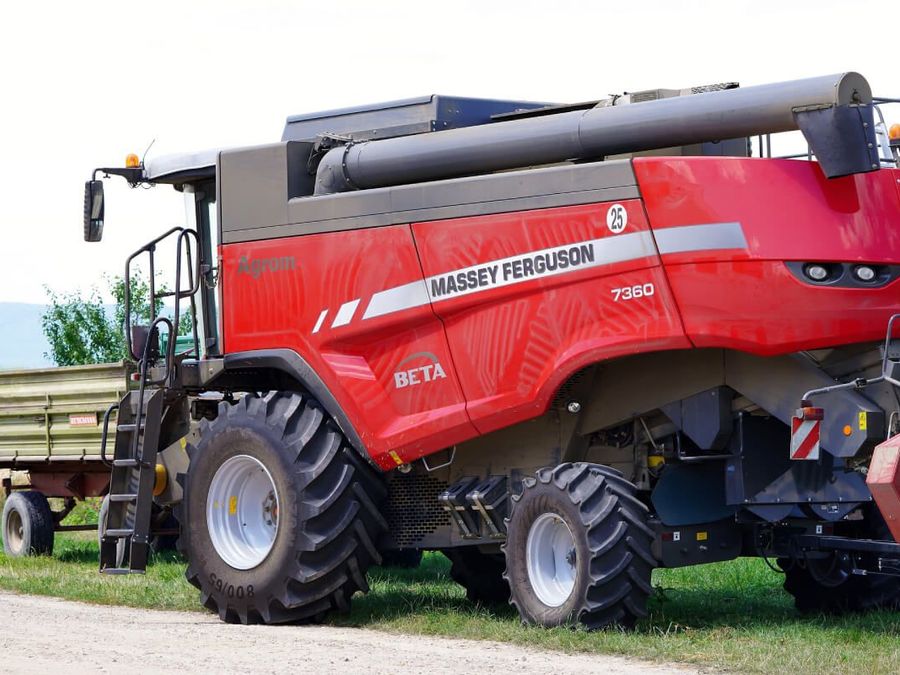
Massey Ferguson offers one of the broader combine ranges in this list.
Rather than concentrating only on very large machines, the current UK line-up includes MF Activa, MF Activa S, MF Beta and MF IDEAL. This gives the brand options for smaller and medium-sized farms as well as higher-output arable businesses.
Which Massey Ferguson combine should you know?
At the top of the current UK Massey Ferguson range is the MF IDEAL 9.
It produces up to 660 hp, has a 17,100-litre grain tank and uses a twin-rotor threshing and separation system. The current UK IDEAL range comprises IDEAL 7, 8 and 9 models.
This is an important correction to the old German article: Fendt and Massey Ferguson should not simply be described as offering an identical IDEAL 9 flagship today. Fendt's range now extends to the 790 hp IDEAL 10T, whereas Massey Ferguson's current UK range tops out at the IDEAL 9.
Why consider Massey Ferguson in the UK or Ireland?
The range is worth considering when straw quality and conventional threshing remain important as well as when high rotary-combine capacity is required.
For example, the Activa and Beta ranges give buyers alternatives to jumping directly into a large rotary machine.
That can be particularly relevant to mixed farms where baled straw remains a valuable part of the farming system.
Popular Massey Ferguson combine ranges: IDEAL, Beta, Activa S and Activa.
8. Sampo-Rosenlew combine harvesters
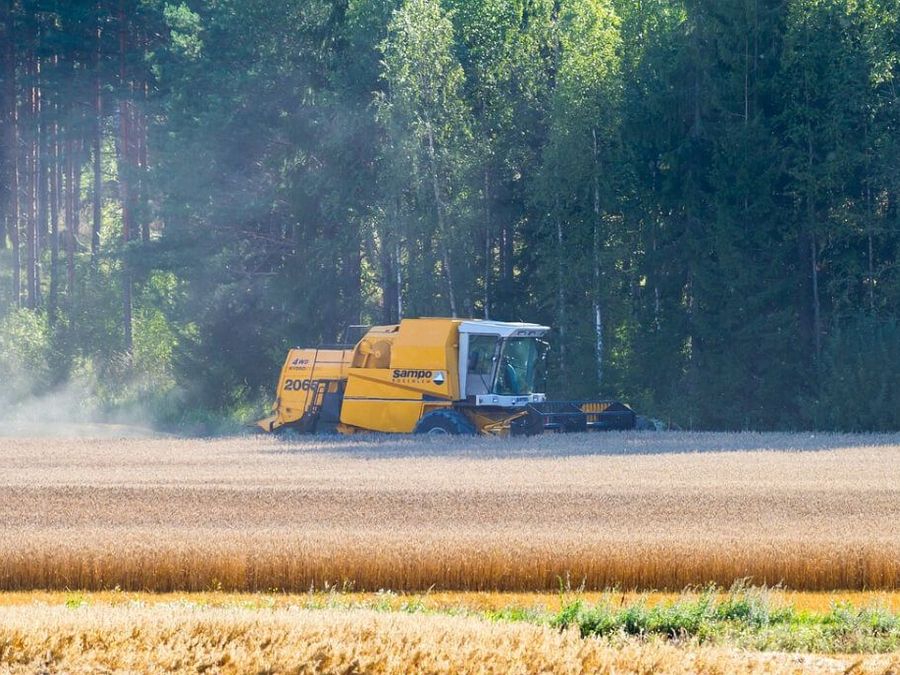
Finnish manufacturer Sampo-Rosenlew is much smaller than CLAAS, John Deere or CNH, but it occupies an interesting niche in the combine market.
Its range stretches from compact machines to larger Comia combines, and the company also manufactures specialist plot combines for crop trials and seed breeding.
Which Sampo-Rosenlew combine should you know?
At the larger end of the current range is the Comia C24 2Roto.
It has a 6.9 m cutting header, a 10,000-litre grain tank and a 300 hp AGCO Power engine. Unlike the smaller straw-walker Comia models, the C24 incorporates twin rotors for secondary separation.
At the opposite end of the range, Sampo-Rosenlew's C2 plot combine can be fitted with headers as narrow as 1.5 metres, demonstrating just how different the manufacturer's target applications can be.
Why consider Sampo-Rosenlew?
Sampo-Rosenlew is unlikely to be the first brand considered by every British or Irish farmer, but that is precisely what makes it worth including in a broader comparison.
Its machines can suit buyers who do not require the scale or complexity of the largest combines, while used examples add another option to the European second-hand market.
Popular Sampo-Rosenlew ranges: Comia C6, C8, C10, C12, C14 and C20/C24 2Roto.
9. Laverda combine harvesters
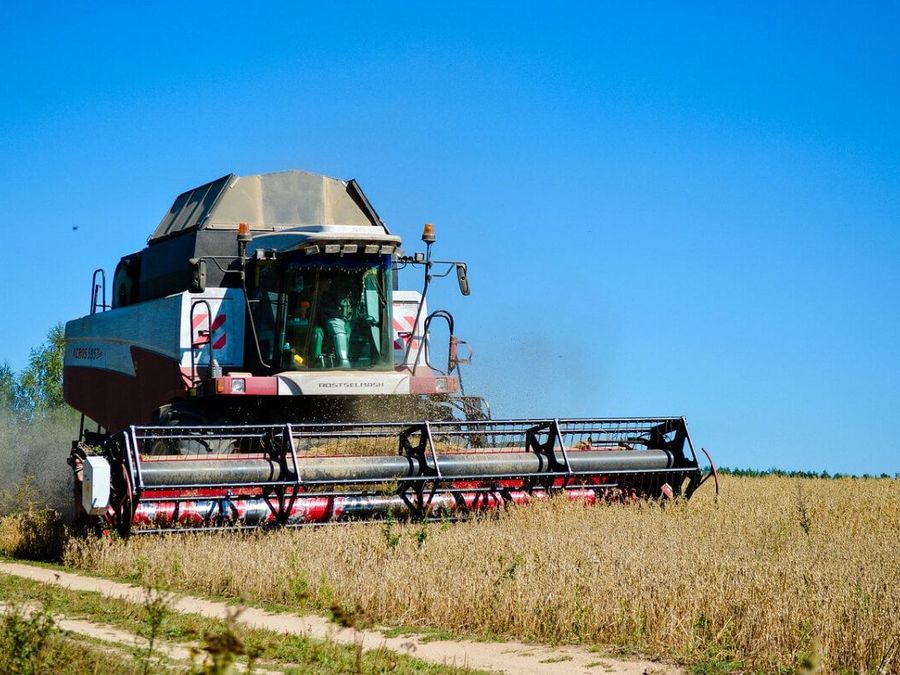
Laverda deserves a place in a UK and Ireland guide for a different reason: the used market.
The Italian manufacturer has a long history of combine production, and machines such as the Laverda 3650, 3750, 3790 and M-series combines can still be found for sale in Britain, Ireland and continental Europe.
Current 2026 listings include Laverda machines located in the UK and offered to Irish buyers, while E-FARM also carries used examples such as the 255 LCS and M-series.
Which Laverda combine should you know?
If you are looking at second-hand machinery rather than new combines, the Laverda M304 and M306 are useful models to recognise, together with older 3000-series machines.
These are very different propositions from a modern CR11, X9 or LEXION. Their attraction is more likely to be purchase cost, mechanical familiarity and suitability for farms that do not need enormous annual harvesting capacity.
Why consider a used Laverda?
Older combines can make economic sense where annual acreage does not justify the cost of a newer high-capacity machine.
However, condition becomes much more important than the badge on the side of the combine. Before buying, check threshing components, straw walkers where fitted, bearings, elevators, belts, chains, augers, header wear, engine hours and parts availability.
Popular used Laverda models: 3650, 3750, 3790, 255 LCS, M304 and M306.
Frequently Asked Questions About Combine Harvesters
Which combine harvester brand is best?
There is no single best combine harvester brand for every farm. The right choice depends on harvested acreage, crop mix, straw requirements, available harvesting window, dealer support and operating costs.
Large arable farms and contractors may prioritise the high throughput offered by machines such as the CLAAS LEXION, New Holland CR, John Deere X9 or Case IH AF series. Smaller or mixed farms may place greater value on conventional threshing, straw quality and lower running costs.
Local dealer and parts support should also be considered, particularly because downtime during harvest can quickly become expensive.
What is the biggest combine harvester?
There are several ways to define the biggest combine harvester, including horsepower, grain-tank capacity, header width and harvesting throughput
Among the current machines covered in this guide, the New Holland CR11 and Case IH AF10 both offer grain tanks of up to 20,000 litres and maximum engine power of 775 hp.
The CLAAS LEXION 8900 TERRA TRAC and Fendt IDEAL 10T are rated at up to 790 hp, although their grain tanks are smaller at 18,000 and 17,100 litres respectively.
These figures should not be treated as a simple performance ranking. Actual harvesting capacity depends heavily on crop conditions, moisture levels, header configuration, acceptable grain losses and terrain.
What is the difference between a rotary and a straw-walker combine?
A conventional combine usually threshes the crop with a drum before the remaining material passes over straw walkers, which separate the remaining grain.
A rotary combine uses one or more longitudinal rotors for threshing and/or separation. Rotary systems are often designed for very high throughput, while straw-walker combines remain popular where straw quality, simplicity and conventional threshing are priorities.
Hybrid combines combine elements of both systems. CLAAS LEXION machines, for example, use drum-based primary threshing followed by rotary secondary separation.
Which combine harvester brands use rotors?
Several major manufacturers use rotary technology, although their systems differ considerably.
Case IH is particularly associated with its single-rotor Axial-Flow concept. New Holland CR combines use twin rotors, while the John Deere X9 uses a dual-rotor system.
Fendt IDEAL and Massey Ferguson IDEAL combines use one or two rotors depending on the model. CLAAS takes a hybrid approach on larger LEXION machines, combining conventional primary threshing with rotary separation.
Should I buy a new or used combine harvester?
The decision mainly depends on annual utilisation, available capital and the cost of harvest downtime.
A new combine may make sense for contractors and high-acreage farms that can make full use of its capacity, automation, warranty and latest technology.
For farms with lower annual utilisation, a well-maintained used combine can provide a much lower cost of ownership.
The key is to buy enough reliable capacity to harvest the crop within the available weather window rather than simply choosing the largest machine available.
How important is straw quality when choosing a combine?
Straw quality can be an important deciding factor on mixed farms and businesses where straw is baled and sold or reused.
Conventional straw-walker combines are often favoured where maintaining long, baleable straw is a priority. Rotary and hybrid combines can provide substantially higher throughput, although crop conditions and machine settings can affect straw condition.
If straw has significant value to the farm, threshing and separation technology should therefore be considered alongside horsepower and grain-tank capacity.
How important is dealer and parts support?
Dealer support can be just as important as the specifications of the combine itself.
Harvesting often takes place within a narrow weather window, particularly in the UK and Ireland. A machine that is out of service for several days because a component or technician is unavailable can cost considerably more than a small difference in purchase price.
Before choosing a brand, check the availability of local servicing, commonly required parts and specialist technical support.
What size combine harvester do I need?
Combine size should be matched to the area that must be harvested, expected crop yields and the number of suitable harvesting days typically available.
A machine with insufficient capacity can delay harvest and increase weather risk. However, buying substantially more capacity than the farm requires can increase depreciation, maintenance and financing costs without delivering a corresponding benefit.
Header width, field size, transport requirements and grain-handling capacity should also be considered when sizing a combine.
What are the main combine harvester brands in Europe?
Some of the best-known combine harvester brands across Europe include CLAAS, New Holland, John Deere, Case IH, Fendt and Massey Ferguson. Other manufacturers such as DEUTZ-FAHR, Sampo-Rosenlew and Laverda also have a presence in European markets, particularly in certain regions and on the used machinery market.
The availability of individual brands and models varies by country, so local dealer coverage, parts availability and service support should always be considered when choosing a combine harvester.